
Health Testing at Platinum Goldens
Thoughtful Breeding Begins With Health
At Platinum Goldens, producing beautiful Golden Retrievers is only part of our purpose. We carefully consider health, temperament, structure, pedigree, and genetic compatibility before planning each litter.
Our breeding dogs complete comprehensive health screenings appropriate for Golden Retrievers before entering our program. These evaluations help us make informed breeding decisions and reduce the risk of passing preventable hereditary conditions to future generations.

The Golden Retriever
“Big Four”
The Golden Retriever Club of America recommends four essential health clearances for Golden Retrievers used for breeding: hips, elbows, heart, and eyes. These evaluations should be completed by qualified veterinary specialists and recorded in a recognized public database whenever applicable.
Hip Evaluation
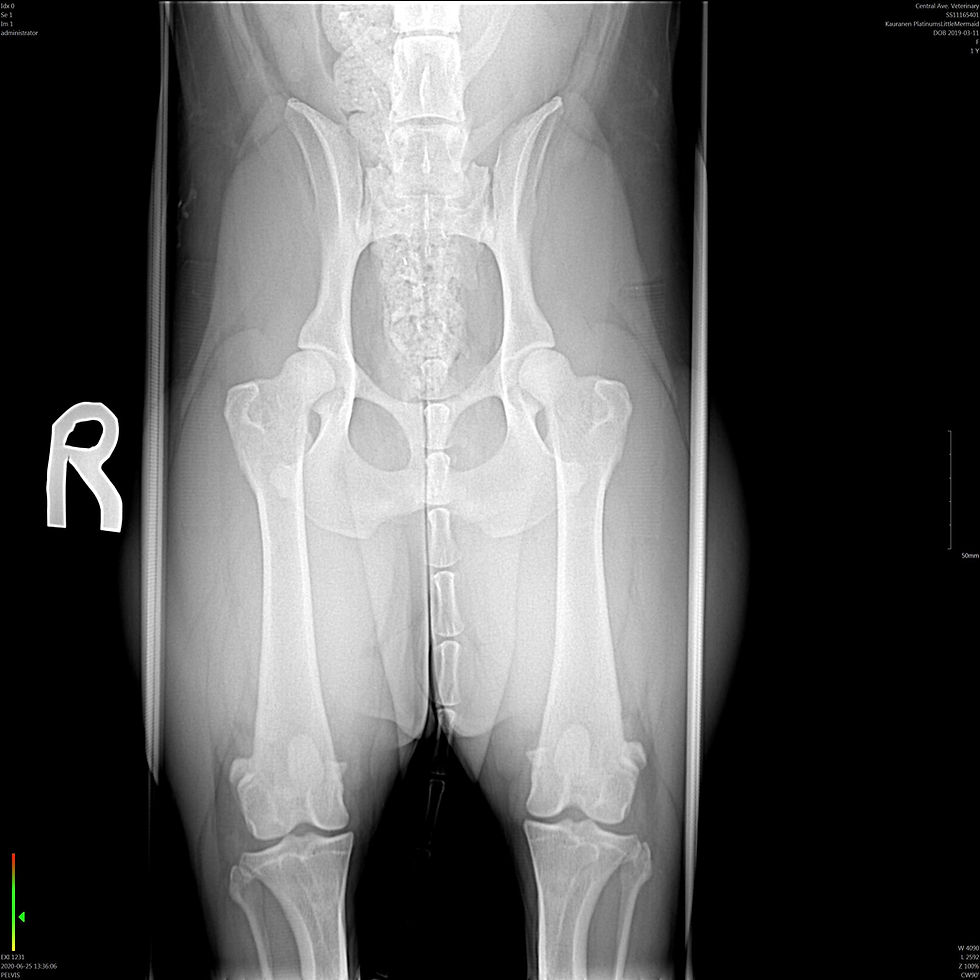
Hip dysplasia is an inherited orthopedic condition in which the hip joint does not develop properly. Breeding dogs should receive a final OFA or accepted PennHIP evaluation at 24 months of age or older.
What it evaluates: Hip-joint formation and evidence of dysplasia.
Elbow Evaluation
Elbow dysplasia can cause discomfort, joint degeneration, and mobility problems. Final elbow radiographs are evaluated through OFA when a dog is at least 24 months old.
What it evaluates: Abnormal development or disease within the elbow joints.
Cardiac Evaluation
Golden Retrievers may be affected by hereditary heart conditions, including subvalvular aortic stenosis. Breeding dogs should receive a cardiac examination at 12 months of age or older from a board-certified veterinary cardiologist.
What it evaluates: Heart rhythm, structure, murmurs, and signs of inherited cardiac disease.
Annual Eye Examination
A standard wellness examination is not the same as a specialist eye clearance. Breeding Goldens should be examined by a board-certified veterinary ophthalmologist within 12 months before breeding. Dogs that have produced puppies should continue receiving yearly examinations throughout their lives.
What it evaluates: Hereditary eye disorders, including conditions that may not appear until later in life.
Genetic Testing
DNA testing gives us another valuable layer of information when evaluating potential breeding pairs. Depending on pedigree and lineage, Golden Retrievers may be screened for conditions such as:
-
prcd-PRA
-
GR-PRA1
-
GR-PRA2
-
Ichthyosis
-
Degenerative myelopathy
-
Neuronal ceroid lipofuscinosis
-
Additional breed-relevant variants as testing advances
A carrier result does not automatically mean a dog is unhealthy or should never be bred. Responsible breeding involves understanding how genetic traits are inherited and carefully selecting a compatible mate so affected puppies are not produced.
DNA testing complements—rather than replaces—specialist examinations for hips, elbows, heart, and eyes.
More Than a Checklist
Responsible breeding is not achieved by checking four boxes. We consider the complete dog, including:
-
Temperament and emotional stability
-
Sound movement and physical structure
-
Pedigree and family health history
-
Genetic diversity and compatibility
-
Overall wellness and reproductive health
-
The health and longevity of relatives and previous offspring
Every potential pairing is considered individually. Our goal is never simply to produce puppies—it is to preserve the qualities that make the Golden Retriever such an extraordinary family companion.
Understanding OFA and CHIC
The Orthopedic Foundation for Animals maintains a searchable database of canine health-screening results. This allows puppy families and breeders to independently review available records.
A CHIC number indicates that a dog completed the health screenings recommended by its national parent club and that the results were made publicly available. It does not necessarily mean every result was normal, so the individual records should always be reviewed.
What Health Testing Can—
and Cannot—Do
Health testing significantly improves the information available when making breeding decisions, but no breeder can guarantee that a dog will never experience illness or an inherited condition.
Living organisms are wonderfully complex. Some conditions do not yet have reliable screening tests, and others may be influenced by many genes, environment, nutrition, development, or chance.
Our commitment is to use the best information available, remain transparent with our families, and continually refine our program as veterinary research advances.
Our Commitment to Every Puppy
Our responsibility does not end when a puppy leaves our home. Each Platinum Goldens puppy is raised with intentional care and goes home with veterinary records, health information, ongoing breeder support, and the protections outlined in our puppy contract.
We want our families to feel confident—not only about where their puppy came from, but about the care and thought invested in the generations behind them.
Bred With Purpose. Raised With Love.
Choosing a responsibly bred puppy begins with asking the right questions. We welcome thoughtful families who value health, temperament, transparency, and lifelong breeder support.